
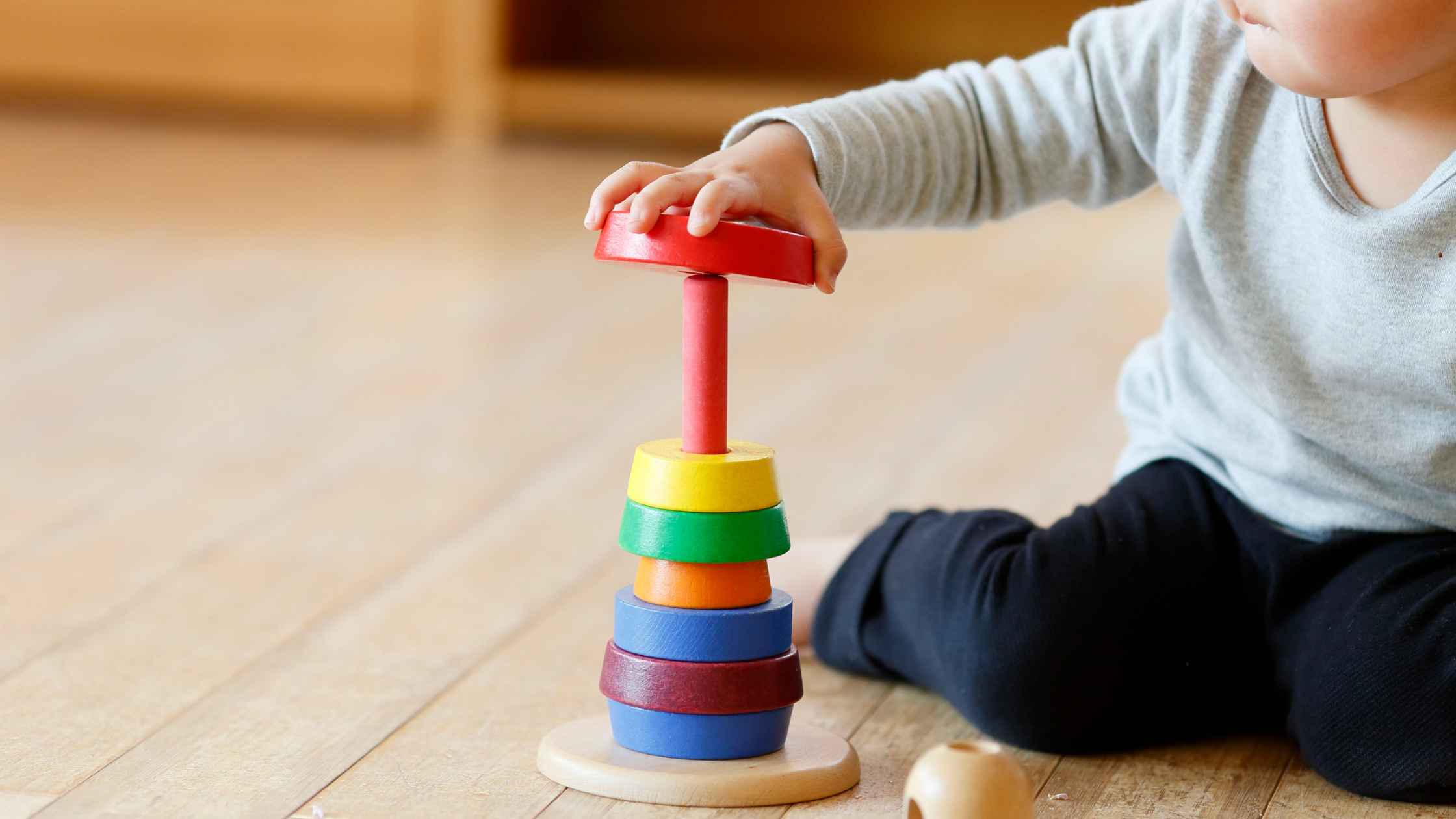
The Power of Continuity: Why Your Child’s Montessori Journey Shouldn’t End at Kindergarten
Every spring, countless Ontario parents face a difficult transition: their child has thrived in Montessori preschool, but now it’s time for Grade 1. Most assume they have two choices—switch to public school or find a traditional private school.
But there’s a third option that most families don’t even realize exists: continuing Montessori through elementary school.
At Head Start Montessori, we now offer authentic Montessori education from age 6 months to 3 years (infant and toddler groups) and age 3 through Grade 6—because stopping Montessori at kindergarten is like reading only the first chapters of a powerful story.
The Montessori “Secret” Most Ontario Parents Miss
Here’s what many parents don’t know: Dr. Maria Montessori didn’t design her method just for preschoolers. She developed distinct, research-based curricula for each developmental stage—including elementary education through age 12.
Yet Montessori elementary programs are remarkably rare in Ontario. While dozens of Montessori preschools exist in major cities, very few continue past kindergarten, and even fewer extend to Grade 6. This scarcity means most families assume Montessori is something their child will “graduate from” at age 5 or 6.
The reality? The elementary years represent some of the most powerful opportunities in Montessori education—if your child has access to them.
What Happens When You Stop at Kindergarten
When children transition from Montessori Casa to traditional Grade 1, they often experience what educators call “Montessori culture shock.”
After spending formative years in an environment that honored their individual pace, allowed freedom of choice, fostered intrinsic motivation, and built independence, they suddenly enter a system that typically requires:
- Whole-class instruction at a uniform pace
- Seated work at assigned times with limited choice
- External rewards (stickers, grades) and consequences
- Teacher-directed learning instead of self-discovery
- Annual transitions to new teachers and classmates
- Homework and testing as primary assessment methods
For many Montessori-educated children, this doesn’t just require adjustment—it can undermine the very qualities that Montessori so carefully cultivated: love of learning, intrinsic motivation, and confident independence.
Your Child Grows Here, Not Just Attends Here
Continuity isn’t just about convenience—it’s about compounding growth.
When children continue from Montessori Casa into elementary at Head Start Montessori, something remarkable happens. They don’t just maintain what they’ve learned—they accelerate into new territory that’s only possible because of the foundation already built.
The Three-Year Cycle Advantage
Montessori elementary operates on three-year cycles (Grades 1-3 and Grades 4-6). This isn’t arbitrary—it’s intentional design:
Year 1: Children enter as the youngest members of their community. They observe older students working on advanced materials, see what’s possible, and are gently oriented to elementary expectations. They’re mentored by more experienced peers.
Year 2: Children hit their stride. They understand the rhythms, tackle more complex work, and serve as both learners and emerging mentors.
Year 3: This is the culmination year. Children become classroom leaders—mentoring younger students, demonstrating mastery, and experiencing the pride and responsibility of being the eldest.
What’s lost in traditional school: Children restart this social hierarchy every single year. Each September, they’re “new” again, learning a new teacher’s expectations, adjusting to new classmates, rebuilding relationships. The continuity and leadership development of the three-year cycle never materializes.
Relationship Continuity Creates Security
At Head Start Montessori, elementary children typically have the same lead guide for three years. When a guide observes your child across multiple years, they develop intimate knowledge of your child’s learning style, strengths, challenges, motivations, and family context.
This depth of relationship allows for truly individualized education. The guide doesn’t spend September “figuring out” your child—they already know exactly what your child needs next.
For children: This consistency provides emotional security during the intense developmental changes of ages 6-12. Your child has a trusted adult who truly knows them.
For parents: You build a genuine partnership with your child’s guide, rather than starting from scratch annually.
Montessori Elementary Is Different (Not “More of the Same”)
Some parents worry that continuing Montessori means their child will simply repeat what they did in Casa. This reveals unfamiliarity with how dramatically different Montessori elementary actually is.
The Montessori elementary curriculum includes:
- Cosmic Education: An integrated approach helping children understand their place in the universe and the interconnection of all knowledge
- The Great Lessons: Dramatic presentations that ignite imagination about the universe’s creation, life’s emergence, human history, language, and mathematics
- Going Out: Student-initiated field research where children identify questions, plan trips, contact experts, and bring learning back to the classroom
- Advanced Materials: Continued hands-on exploration with increasingly complex materials across all subject areas
- Collaborative Research Projects: Leveraging the intensely social nature of elementary-age learners
- Moral and Social Development: Explicit attention to justice, fairness, and responsibility
This isn’t Casa with bigger chairs. It’s a distinctly different curriculum designed for a distinctly different developmental stage.
The Research Backs Continuity
Studies on Montessori elementary show compelling outcomes. Children who continue through Montessori elementary demonstrate:
- Stronger executive function and self-regulation abilities
- Superior creative problem-solving compared to traditionally educated peers
- Greater intrinsic motivation for learning tasks
- Advanced social skills including conflict resolution and collaboration
- Equivalent or superior academic achievement on standardized measures
Critically, the benefits are dose-dependent: children who experience Montessori for longer periods show greater gains than those who attend for only a year or two.
Montessori Elementary vs. Public School: An Honest Comparison
We understand choosing Montessori elementary means continuing to invest in private education when free public school is available. Here’s how Montessori elementary at Head Start Montessori differs from typical Ontario public elementary:
Learning Approach
- Head Start: Hands-on materials, three-hour work cycles, child-directed choice, no homework or traditional tests
- Public School: Primarily worksheet-based, frequent transitions, teacher-directed instruction, regular homework and testing
Curriculum
- Head Start: Integrated thematic approach, all subjects connected, deep dives into student interests
- Public School: Subjects taught separately, curriculum prescribed by ministry standards, coverage prioritized over depth
Social Environment
- Head Start: Multi-age classrooms (6-9, then 9-12), peer mentoring encouraged, three-year continuity with same guide
- Public School: Single-grade classrooms, new teacher annually, limited cross-age interaction
Both can produce educated children. The question is: which environment best matches your child’s needs and your family’s values?
Now Through Grade 6: Completing the Elementary Journey
Head Start Montessori is excited to announce we now offer Montessori education through Grade 6, completing the full elementary Montessori experience (ages 6-12).
This means your child can now:
- Experience two complete three-year cycles (Grades 1-3 and 4-6)
- Develop deep mastery across all subject areas through continued hands-on exploration
- Build leadership skills twice—once in Lower Elementary, again in Upper Elementary
- Maintain relationships and community through their entire elementary journey
- Transition to secondary school with a solid academic foundation and genuine love of learning intact
The upper elementary years (ages 9-12) represent another distinct developmental phase in Montessori, characterized by peer collaboration, moral reasoning, and the capacity for abstract thinking. Our Grade 4-6 program honors these characteristics with age-appropriate curriculum and environment.
Who Benefits Most from Montessori Elementary Continuity?
While we believe Montessori elementary serves all children well, certain students particularly thrive:
- The child who already thrived in Montessori Casa—why disrupt what’s working?
- The advanced learner who can accelerate without grade-skipping
- The child who needs more time to master concepts without being labeled “behind”
- The kinesthetic learner who needs to move to learn
- The curious questioner who wants to understand deeply, not just memorize
- The sensitive child who benefits from consistent relationships and explicit social-emotional curriculum
The Investment That Compounds
Each year in Montessori builds on the previous, creating compound returns on your educational investment. The three years in Casa become exponentially more valuable when allowed to bloom into elementary—and the elementary years set the stage for successful secondary education and beyond.
When you choose Montessori elementary at Head Start Montessori through Grade 6, you’re choosing to:
- Complete the story, not stop halfway through
- Give your child the gift of being deeply known over many years
- Allow your educational investment to fully mature
- Let your child experience authentic leadership and culmination twice
- Maintain the community and relationships that matter during formative years
Learn More About Our Elementary Program
The power of Montessori elementary is difficult to describe—but unmistakable when you see it in action.
We invite you to observe our elementary classrooms during a work cycle. Watch 6-12 year-olds engaged in self-directed learning. See older children naturally mentoring younger ones. Notice the focus, collaboration, and joy in discovery.
Schedule a tour or contact us to discuss whether Montessori elementary through Grade 6 is right for your family. Spaces are limited—we maintain small class sizes to ensure the individualized attention that makes continuity so powerful.
Your child’s educational journey doesn’t have to end at age 6. At Head Start Montessori, it doesn’t have to.
Because the best chapters happen when you read the whole book.